mèmore agg. [dal lat. memor -ŏris, affine al gr. μέρμηρα «sollecitudine», μέριμνα «pensiero», e al sanscr. smàrati «egli si ricorda»]. – Che conserva il ricordo di un fatto non solo nella mente ma anche nel sentimento, e in modo continuo, non momentaneo: sono sempre m. delle sue parole; un popolo m. delle dolorose esperienze passate; con riferimento al bene avuto da qualche persona, include l’idea della gratitudine: essere m. dei benefìci ricevuti.
Mèmore / Francesco Giusti
Project Description
Mèmore – One who preserves the memory of an event not only in the mind but also in feeling, in a continuous rather than fleeting way; with reference to the good received from someone, it includes the idea of gratitude.
This project stems from an invitation and an intimate sharing. Following the loss of both her parents during Covid-19, my friend Claudia invited me to an artist residency inside their family home in Genoa. My focus turned to the family photo albums, conceived as devices of affective archiving.
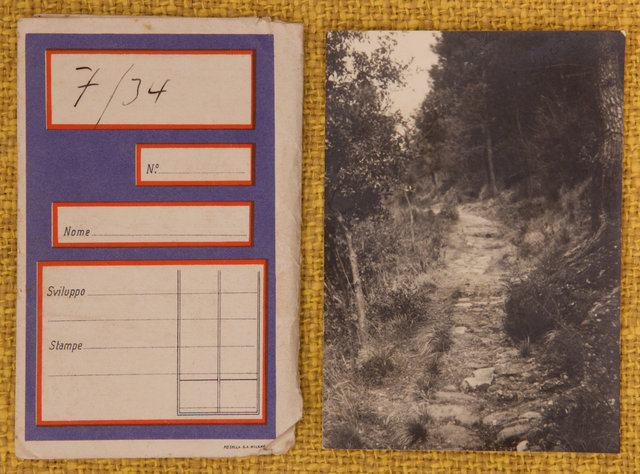
My research developed through a deconstruction, recomposition, and overlapping of this material. The images of the album covers, with their 1960s and 1970s stock-image archive style, are brought into a dialogue with the photographs contained within the album itself, in search of new meanings, new connections, and new emotions.
Within this layering, the covers and internal pages of the albums become active elements, capable of isolating fragments and redefining the boundaries of the images, transforming the object-album-archive into a space for investigating the very nature of memory and its limits, up to the thresholds of the faded memory.
Through juxtapositions and overlaps, the new images celebrate the intrinsic incompleteness of memory and provide a visual dialogue between presence and absence.
Mèmore / Francesco Giusti
Project Description
Mèmore – One who preserves the memory of an event not only in the mind but also in feeling, in a continuous rather than fleeting way; with reference to the good received from someone, it includes the idea of gratitude.
This project stems from an invitation and an intimate sharing. Following the loss of both her parents during Covid-19, my friend Claudia invited me to an artist residency inside their family home in Genoa. My focus turned to the family photo albums, conceived as devices of affective archiving.
My research developed through a deconstruction, recomposition, and overlapping of this material. The images of the album covers, with their 1960s and 1970s stock-image archive style, are brought into a dialogue with the photographs contained within the album itself, in search of new meanings, new connections, and new emotions.
Within this layering, the covers and internal pages of the albums become active elements, capable of isolating fragments and redefining the boundaries of the images, transforming the object-album-archive into a space for investigating the very nature of memory and its limits, up to the thresholds of the faded memory.
Through juxtapositions and overlaps, the new images celebrate the intrinsic incompleteness of memory and provide a visual dialogue between presence and absence.